The National Central Museum of the Republic of Kazakhstan opens the exhibition “The Masters of Kazakh Art”, dedicated to the creative heritage of outstanding artists of the Republic of Kazakhstan: the 100th anniversary of the People's Artist of the RK Sakhi Romanov and the 90th anniversary of the Honored Worker of Arts of the RK Tursyn Abuov.
The exhibition project reveals the multifaceted legacy of two masters whose works became an important part of the history of 20th-century national fine arts. Although their artistic journeys were shaped during the era of Soviet socialist realism, each artist created a distinct, recognizable style and made a unique contribution to the development of the Kazakhstani art school.
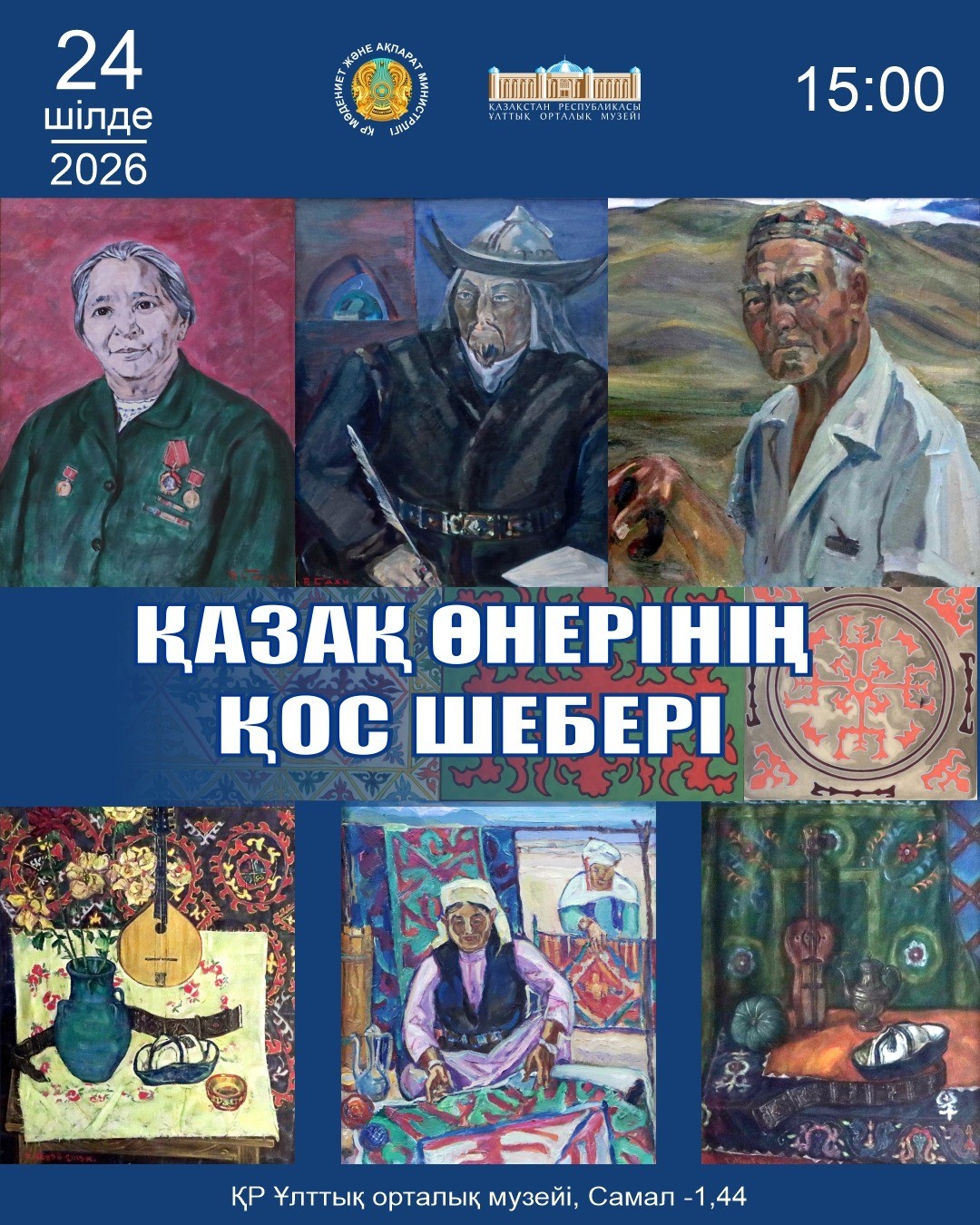
The exposition introduces visitors to works from the collections of the Central State Museum of the Republic of Kazakhstan, including paintings and graphic works. Many of the featured pieces have rarely been displayed to the general public, offering a deeper insight into the features of the masters' creative methods for the first time.
Sakhi Romanov entered the history of fine arts as a talented painter, graphic artist, and creator of famous set sketches for national films. Raised in an orphanage, he pursued education at the country's leading art institutions through talent and perseverance, earning the title of People's Artist of Kazakhstan in 1981
Tursyn Abuov is a broad-range artist who excelled in painting, sculpture, and landscape design. Striving for art since childhood, he received a professional education and was awarded the title of Honored Worker of Arts of Kazakhstan in 1998
By uniting the works of these two masters, the exhibition illustrates how different artistic approaches explored themes of Kazakhstan's history, national culture, traditions, and portraits of the country's prominent figures. Motifs of Kazakh applied arts and ethnography hold a special place in their works, reinterpreted through each author's individual perception
Visitors will not only be able to view artworks but also experience the atmosphere of the era in which these works were created, as well as examine personal items belonging to the artists that reflect their professional journey and creative identity
Location: Museum Balcony Area
Opening Date: July 24, 2026