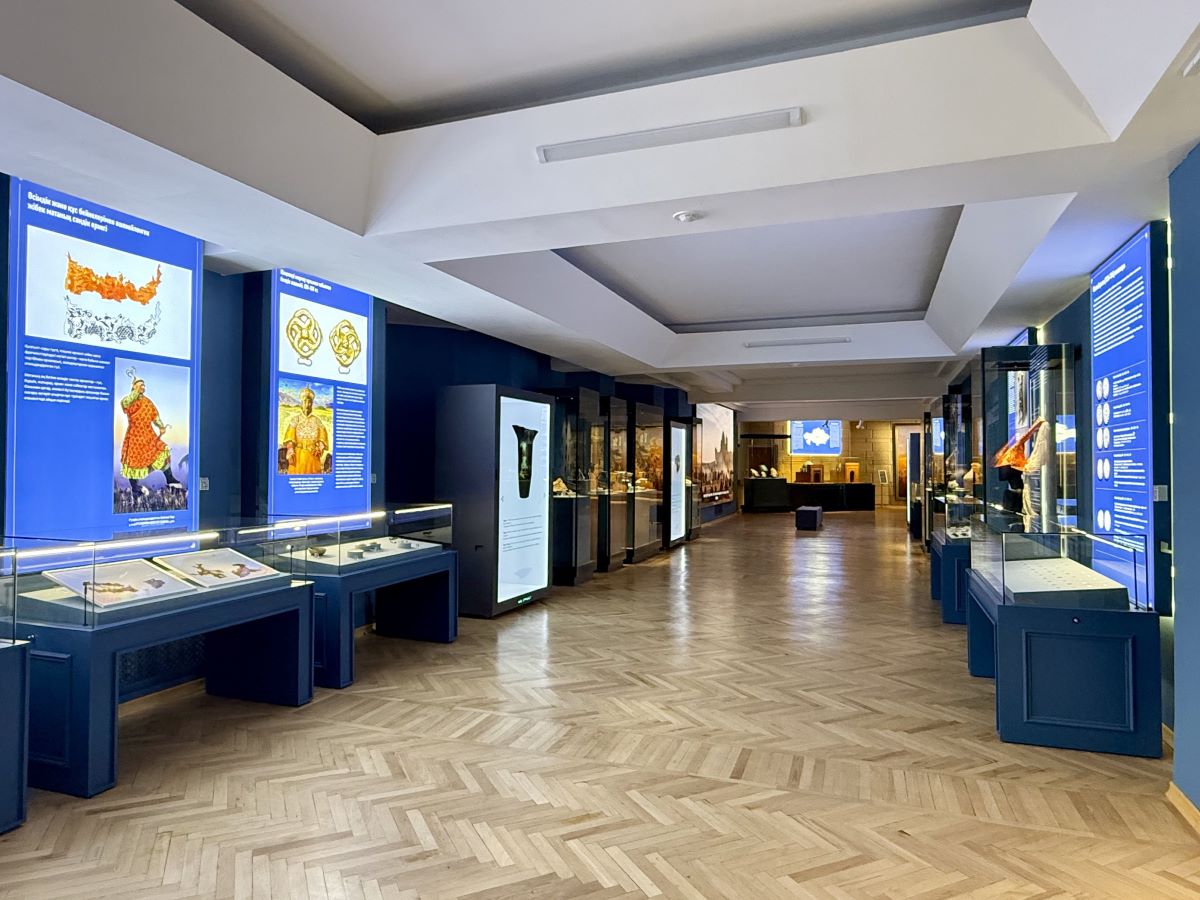
The Golden Horde Hall is dedicated to the state that played a pivotal role in the political, economic, and cultural life of vast territories stretching from Eastern Europe to Central Asia for more than two centuries.
During the 13th and 14th centuries, several major political entities emerged on the territory of present-day Kazakhstan, including the Ulus of Jochi (the Golden Horde) and the Chagatai Ulus. These states later gave rise to the White Horde (Ak Orda), Moghulistan, the State of Abulkhair, and eventually the Kazakh Khanate. Within these states, the city and the steppe were not opposing worlds but complementary components of a single economic and cultural system. Urban centers and nomadic settlements supported one another, while pastoral and agricultural communities coexisted and interacted closely.
The Golden Horde period of Kazakhstan's history spans approximately two and a half centuries. Overall, it had a profound influence on the subsequent ethnic and political development of the region. Despite the devastation experienced in southern Kazakhstan during the Mongol conquests, the era of the Golden Horde became a time of economic prosperity and cultural flourishing across the Great Steppe. Kazakhstan evolved into an important crossroads of international trade and diplomatic relations. During this period, the region's ethnic landscape largely took its final shape, which was reflected anthropologically in the predominance of Mongoloid features among the population.
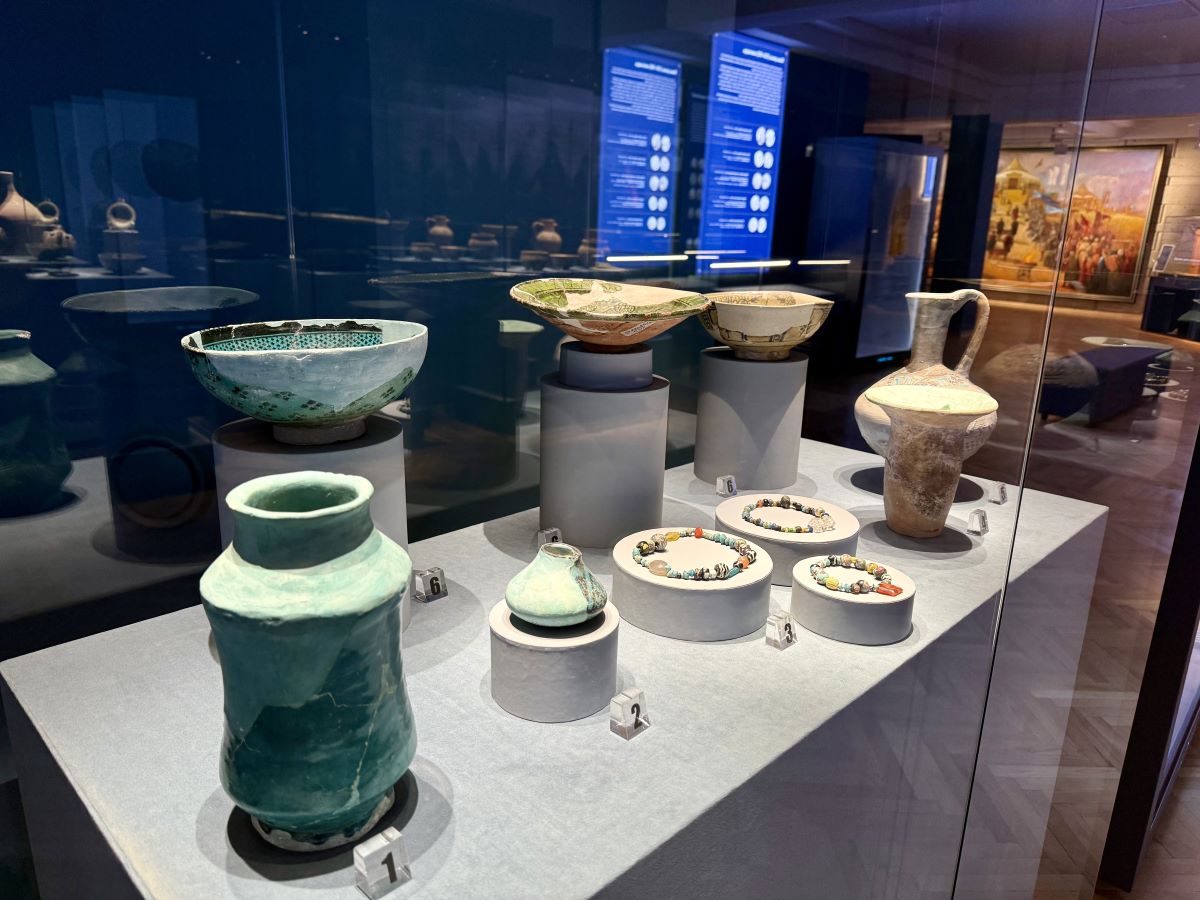
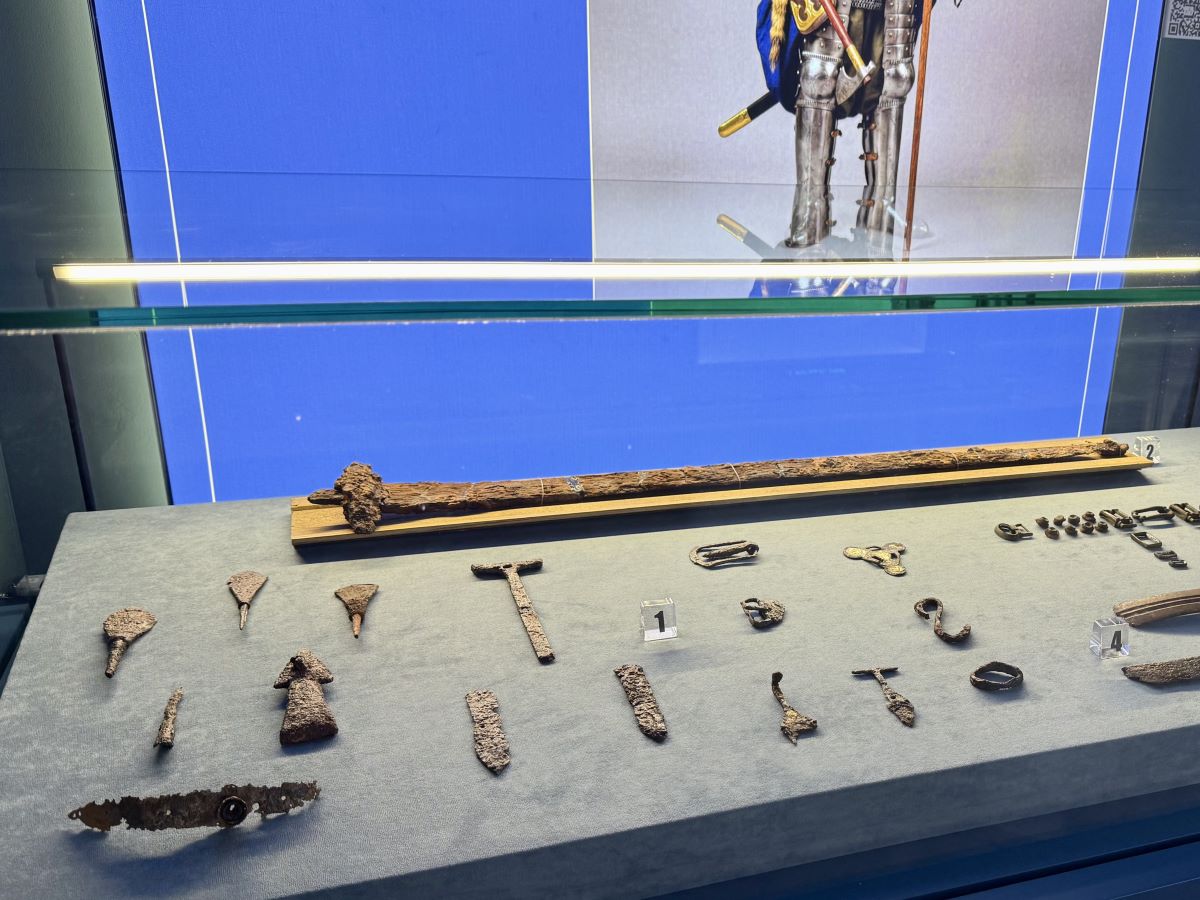
Over many years, the Archaeology Collection of the National Central Museum of the Republic of Kazakhstan has assembled an exceptionally rich collection of medieval artifacts. Particularly noteworthy are the objects dating from the 13th and 14th centuries, which illustrate the culture and everyday life of the Golden Horde period. These collections reflect various aspects of both nomadic and urban cultural traditions. The artifacts were recovered during archaeological excavations, discovered as part of buried hoards, or found accidentally as isolated archaeological complexes.
The exhibition is organized into several thematic sections.
The first presents the equipment of a 13th–14th century warrior, along with fragments of ceremonial textiles that once formed part of the attire of the highest-ranking Chagataid nomadic aristocracy.
The second section is devoted to the Golden Horde cities located within present-day Kazakhstan, including the medieval settlement of Saraishyk and the urban centers of the Otrar Oasis. It also highlights traditional crafts such as pottery, metallurgy, glassmaking, agriculture, and irrigation.
The third section explores the Great Silk Road, international trade, imported goods, and medieval coinage.
The final section is dedicated to the religious architecture of the 13th and 14th centuries.